 | |
Winter 2026 |
Newsletter Archive |
Nature's Engineers in the City of Red Deer |  |
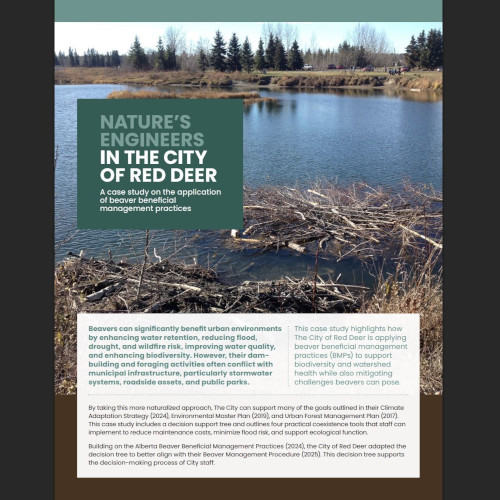
A case study on the application of beaver beneficial management practices (BMPs). The Working with Beavers project aims to enhance coexistence with beavers for watershed health and the ecosystem services they provide. In 2024, we developed the Alberta Beaver Beneficial Management Practices (BMPs) to provide information about available beaver management tools with the goal of improving implementation of beaver coexistence tools in Alberta. By improving human-beaver coexistence, challenges can be mitigated while still maintaining beavers on the landscape, supporting watershed and ecological health and the ecosystem services they provide. Beavers can significantly benefit urban environments by enhancing water retention, reducing flood, drought, and wildfire risk, improving water quality, and enhancing biodiversity. However, their dam building and foraging activities often conflict with municipal infrastructure, particularly stormwater systems, roadside assets, and public parks. This case study highlights how The City of Red Deer is applying beaver BMPs to support biodiversity and watershed health while also mitigating challenges beavers can pose. Adopting these BMPs helps municipalities:
Using beaver BMPs allows municipalities to shift from reactive mitigation to sustainable, long-term coexistence—protecting infrastructure and the environment. Explore the Red Deer case study today and see how your municipality can benefit from adopting beaver BMPs. Partners: The City of Red Deer, Cows and Fish - Riparian Management Society Funders: Government of Alberta's Watershed Resiliency and Restoration Program | |